David R.
Kent
The Handover Plan is the method that helps you understand what your parent really needs, compare the options and secure the decision — staying at home, or a care home. The professionals stay essential: The Handover Plan is what you take to them, so the meeting is worth having.

The doctors and the discharge team are essential. But between the hospital ward and the decision — home care or care home — there is a gap nobody prepares you for. Here is what families live through in that gap, unprepared.
The hospital calls: your mother is coming out. She can't live alone any more. You feel you have two days to find a care home place or organise everything at home. Nobody tells you where to start — or that no law actually sets that deadline.
A care home sends its fees — well past £1,000 a week, as they often do around here. Nobody knows what the council pays, what Attendance Allowance is, or what you'll really be left to fund. The quote sits on the kitchen table. Three weeks later, it's still there.
Your daughter wants her to stay at home. Your son thinks a care home is safer. Nobody actually knows what she can still manage, and nobody has been assessed. Voices rise. Someone leaves the room. Sunday lunch ends there.

Most families put this subject off because it feels heavy, guilt-ridden or complicated.
The Handover Plan makes it simple.
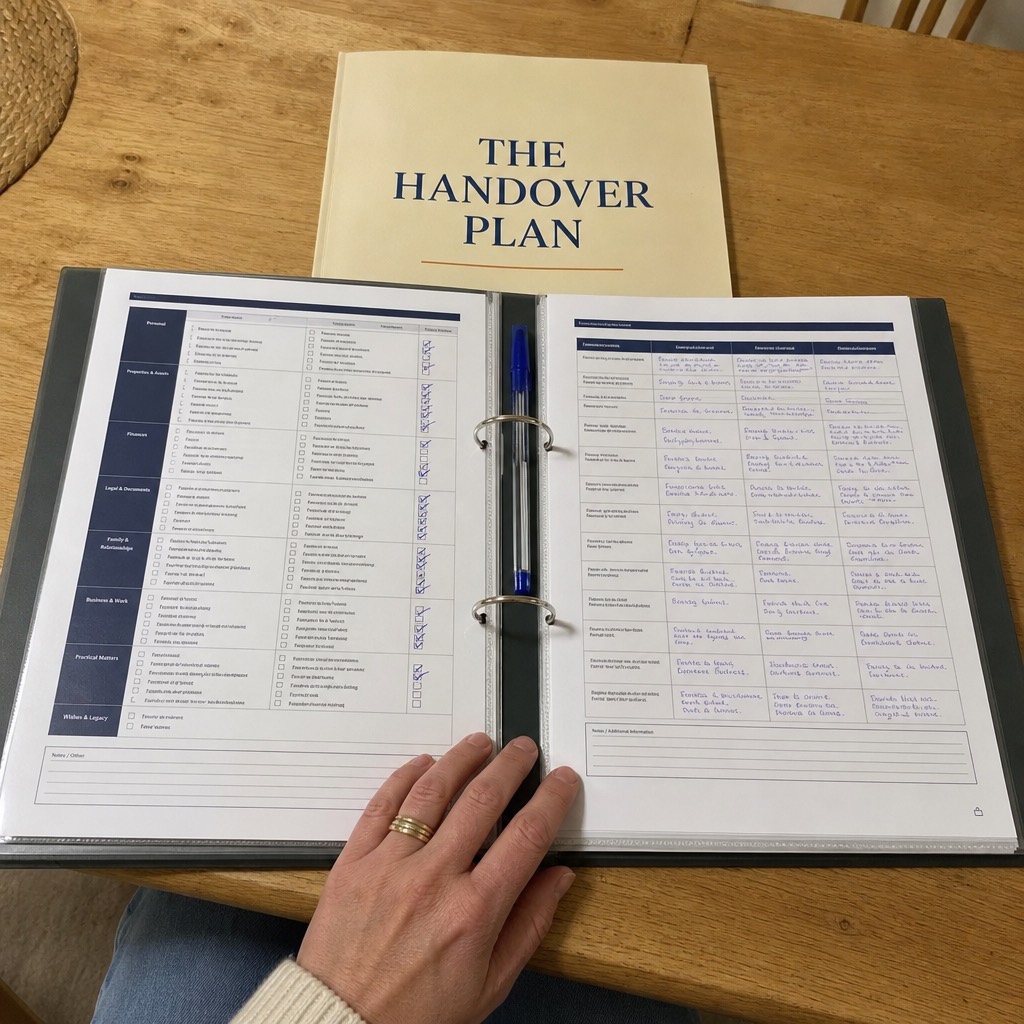
Guided questions. Clear sections. No intimidating blank page.
You move step by step, filling in only what applies to your parent's situation.
A few hours today can save your family weeks of confusion, phone calls and decisions made under pressure later.
Choose your packYour parent's real needs can be misjudged. Quotes can be scattered. The right questions can stay stuck in your head.
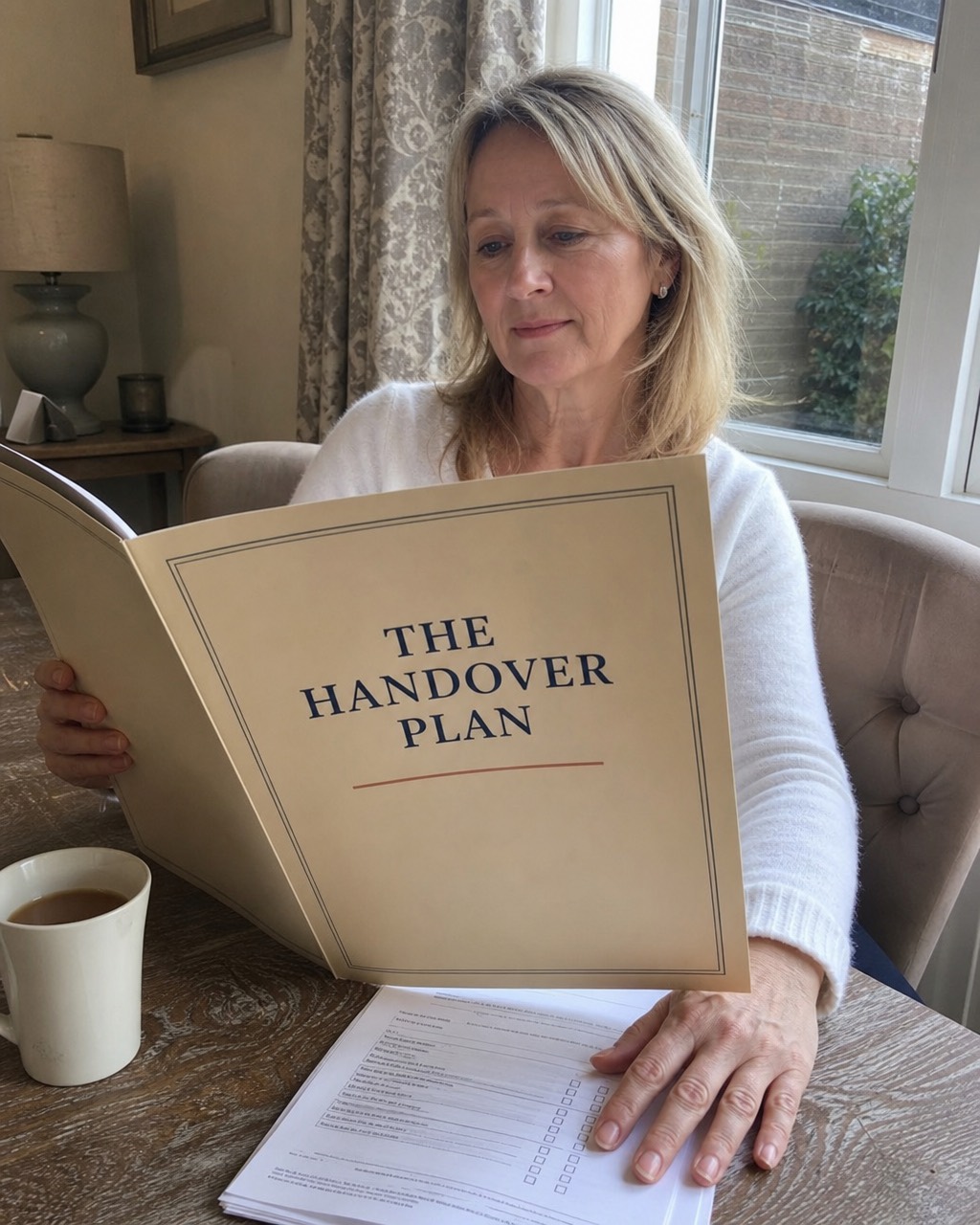
The Handover Plan lets you gather everything into one clear folder you can print and keep to hand.
With the assessment requests. The funding worksheets. Or with someone you trust.
Keep it with your parent's documents. Decide with a clear head.


“I took a rainy weekend to understand everything calmly with a cup of coffee. That evening, I rang my sister to explain what Mum actually needs and what the options are. For the first time, I felt I truly knew what to do for her.”

“It's practical, it's structured, it's guided. You don't need to know the system to fill it in. I did it at the kitchen table on a Sunday afternoon. We now know how to compare care homes without getting it wrong.”

“We did it together, my wife and I, for my father. Our first real conversation about home care versus a care home without raising our voices. The guided sheets make the subject approachable. We decided together, calmly.”
The needs assessment, the means test, the care plan: all of it matters. But between the hospital ward and the decision — home or care home — there is a blind spot nobody talks about.
If nothing is understood in advance, you sign the first care home with a free bed, discover the real cost too late, and miss support your parent may well have been entitled to — starting with the needs assessment, which is free to everyone whatever their savings, but only if somebody asks for it.
The lesson: finding a bed is not the same as protecting a parent. What makes the difference is understanding and comparing before you sign.
“A care decision is not made in a corridor. It is understood, compared and secured.”
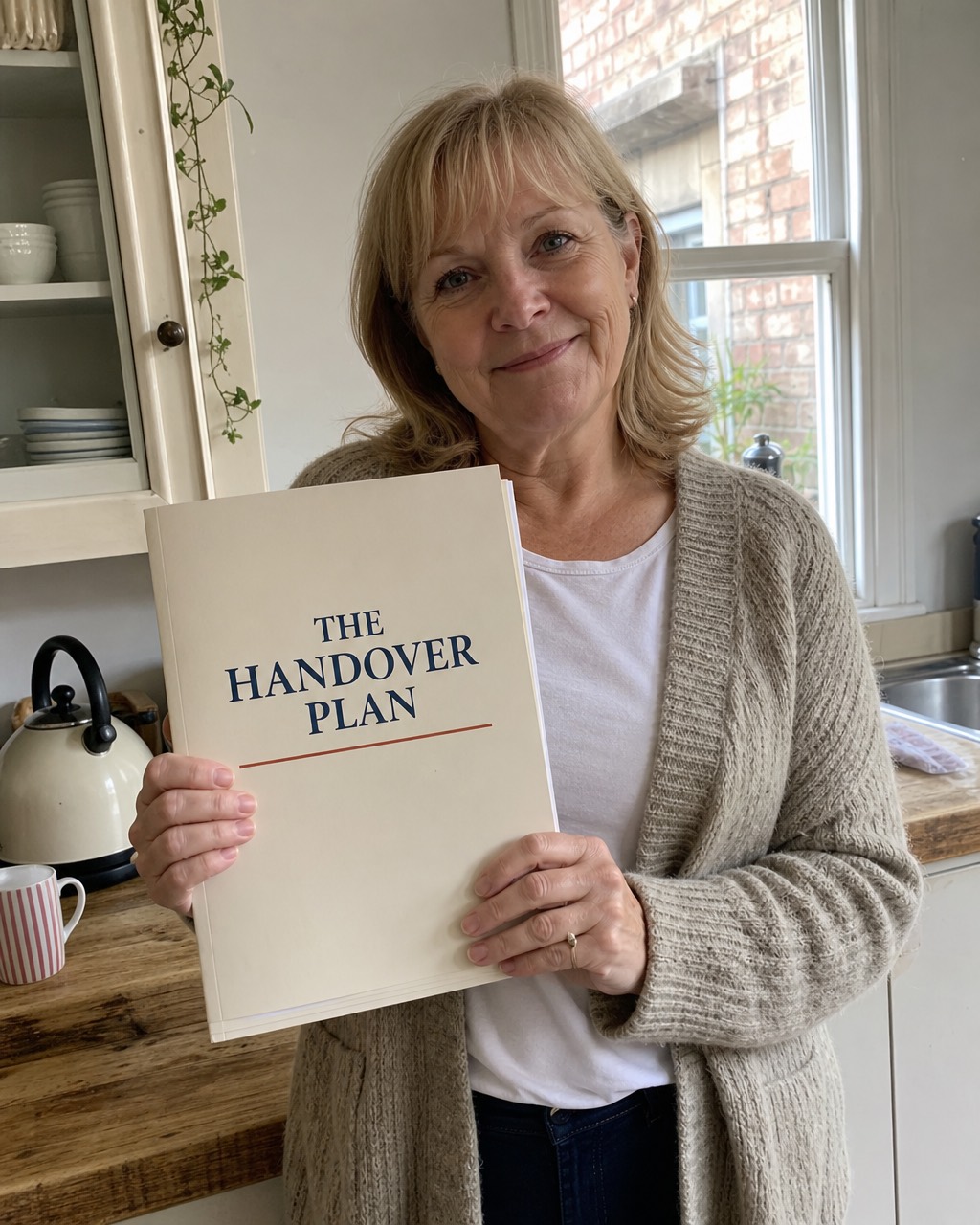
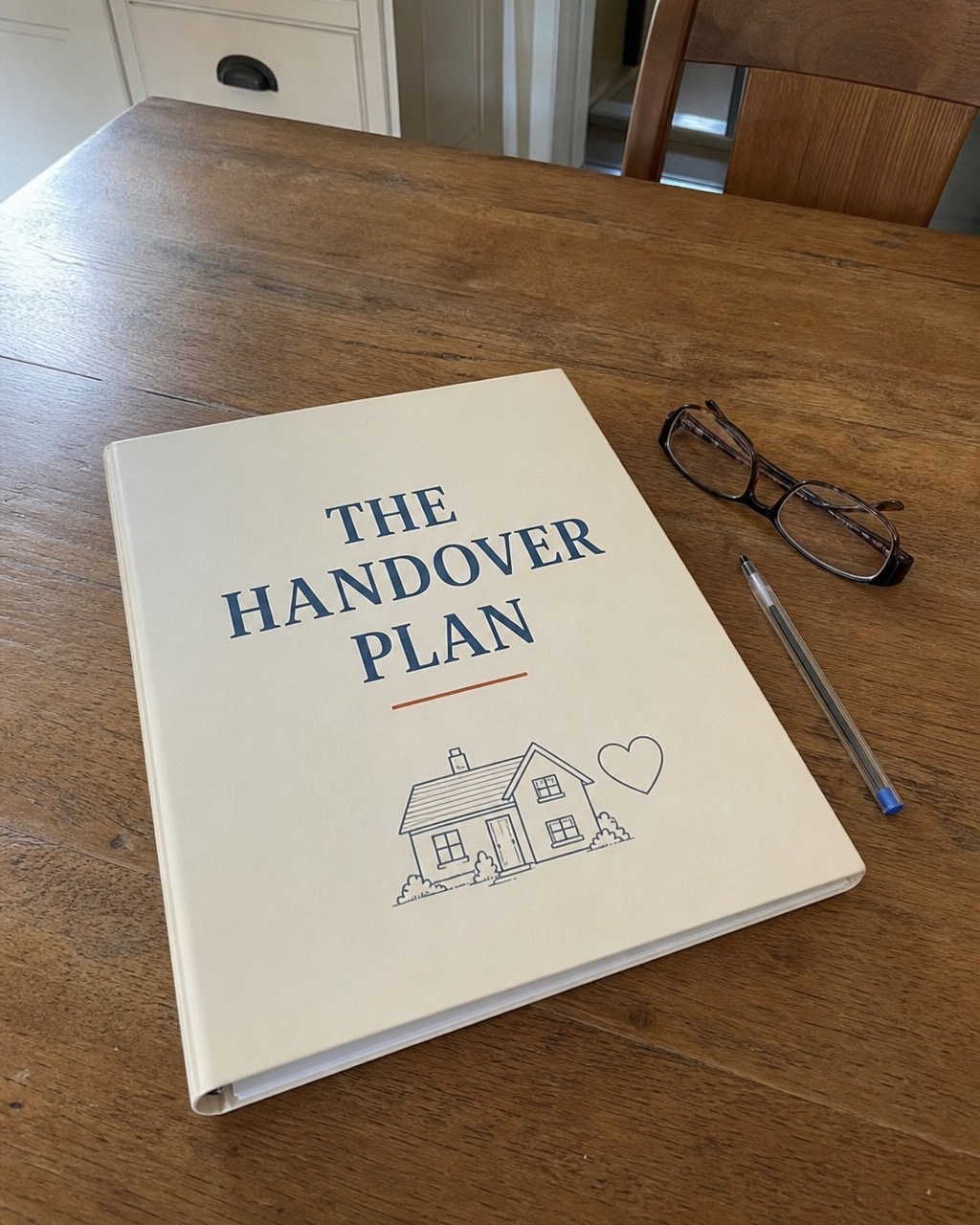
The Handover Plan turns what's spinning in your head into one clear folder, sitting on the table, ready to open.
Simple method. Clear decisions. Peace of mind.
The 48-7-12 Framework is our own way of organising the process — not a set of legal deadlines. There is no statutory time limit on a needs assessment in England, and no law gives a family 48 hours to choose a care home. These are simply the three windows in which the decisions land, and the order in which it helps to take them.
Use the first 48 hours to understand what is being proposed — not to make the final decision. What “medically fit for discharge” really means, the exact words to use with the discharge team, who is coordinating the process, and our plain-English “2-in-10” explainer — our own shorthand for one part of the national eligibility framework, so you can follow what an assessment actually looks at.
The needs assessment — free to everyone, whatever the savings — your own carer's assessment, the NHS checklist where health needs are in play, and the ready-to-send letters so every request is in writing.
The 12-week property disregard — in some qualifying circumstances the value of a former home may be temporarily left out of the financial assessment — the top-up fees to check before you pay them, Attendance Allowance (not normally means-tested, but subject to eligibility), deferred payment agreements, and the decisions that are hardest to reverse.

“What a relief. For the first time in weeks, I slept properly. I understood what Mum actually needs, compared the options, and we decided calmly — without tearing each other apart. It's exactly what I needed.”
Christine, 62 · Yorkshire · The Complete Pack

Twenty years working inside care homes in England. I've seen so many families arrive in a panic, understanding nothing: a place signed in a rush, the real cost discovered too late, the assessment never requested, the paperwork never read. The Handover Plan does, in a few pages and checklists, what I wished I could have explained to every family for twenty years.
The same situation, the same family. Two radically different results, depending on whether you understood the situation — or not.
The Handover Plan is the newest guide in that range, written specifically for families in England. The figure above covers our full range of family-organisation guides, not this guide alone.
Already a Handover Plan customer? Share your experience with other families.
After Mum's fall, the hospital wanted her in the first care home with a free bed, within two days. I was lost. The Plan helped me understand what she actually needs and compare three homes instead of signing one in a panic. We chose the one that truly suited her, not the one that was left. I recommend it to every woman my age.
I'd already read three brochures about care homes that sat on the shelf. This is different: these are sheets you fill in — you don't have to understand everything first. I've seen families sign paperwork without reading a line of it, and regret it. Thanks to the Plan, I read every clause before signing for my father. Genuinely effective.
My father lost his independence last year. My brothers and I were heading straight for a row: home or care home, who decides, who pays. The Sibling Pack shared the roles out clearly. We followed the three windows one by one. We stayed close, and the decision was made calmly within weeks.
We were about to put Mum's house on the market in a rush to pay for the care home. The Complete Pack laid out what we would actually be paying, the questions to put to the council about the property, and how to query a top-up before agreeing to it. We took the time to ask them. Whatever we end up doing, it will be a decision, not a panic. It's a practical tool, not a theory book.
I had no idea where to start with the council. The ready-to-send letters for the needs assessment and my own carer's assessment saved me weeks. Everything was explained, in the right order, with the right people to write to. For the first time I knew what to ask for, and I asked for it in writing. What a relief.
The Essential Pack gets you through the first 48 hours. The Complete Pack is the whole plan — the 48 hours, the first week, and the money side: the house, the fees and the funding.
Understand the situation and know what to do for your parent

£22
One-off payment · no subscription
The whole plan: the 48 hours, the first week, and the weeks that protect the home

£108−50%
£54
One-off payment · no subscription
Summer Flash Offer — save £54
If in doubt, take The Complete Pack: 48-7-12 only works taken whole, and the money window is the one families discover too late. The Essential Pack is there if the next 48 hours are all you can think about today.
Download the Plan, read the documents, print the checklists and start filling them in at your own pace.
If you feel the content hasn't helped you see clearly, simply email raphael@helpsenior.co.uk within 30 days.
No complicated justification, no forms. Once your request is approved we issue the refund within 48–72 business hours, to the payment method you used — your bank or payment provider may take a little longer to show it.
This guarantee sits alongside your statutory rights, including the 14-day right to cancel under the Consumer Contracts Regulations 2013, which we do not disapply for downloaded content.
If you can't find your answer, email us at raphael@helpsenior.co.uk.
The day your parent can no longer live alone, you won't have to guess. You'll open the folder, and you'll know. A few hours this week can save your family months of chaos.
→ Get The Handover Plan🔒 Secure payment · 📧 Emailed within minutes · ♻️ 30-day money-back guarantee